


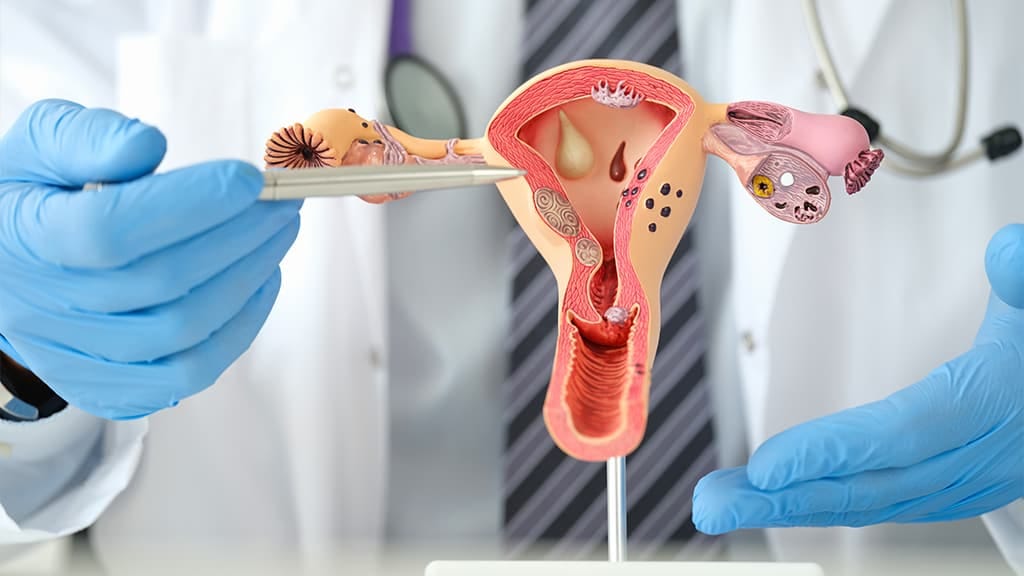
Blocked Fallopian Tubes
For pregnancy to occur naturally, the fallopian tubes must be open. The tubes are responsible for capturing the egg, allowing it to meet the sperm, and enabling fertilization to take place. If one of the fallopian tubes is blocked, natural conception becomes more difficult but is still possible. However, if both tubes are blocked, the egg and sperm cannot meet, and natural pregnancy is not possible unless the blockage is treated. Approximately 30% of female infertility cases are caused by blocked fallopian tubes.
In the 1970s, surgical treatment for blocked tubes was performed through open microsurgery. However, over the past 15 years, these procedures have increasingly been performed laparoscopically (minimally invasive or closed surgery). Laparoscopic microsurgery allows all treatments that were once performed via open surgery to be completed using minimally invasive techniques.
Women who cannot conceive naturally due to blocked tubes may undergo laparoscopic surgery to reopen them. After successful laparoscopic surgery, the chance of achieving natural pregnancy within the first year is approximately 60%.
How Are Blocked Tubes Opened?
Surgical treatment for blocked fallopian tubes can be performed either by laparoscopy or laparotomy. In laparoscopy, a small incision is made below the navel, and a thin telescope-like instrument (laparoscope) is inserted into the abdominal cavity. A camera attached to the laparoscope transmits images of the reproductive organs, including the fallopian tubes, to a monitor.
Additional small incisions are made to insert miniature surgical instruments used during the procedure. With these small incisions and fine instruments, blocked tubes can be treated without compromising the patient’s aesthetic appearance. In contrast, laparotomy involves making a larger abdominal incision to perform open surgery, a method that is rarely preferred today.
Should Blocked Tubes Be Opened or Should IVF Be Performed?
For couples who cannot conceive naturally due to blocked tubes, the first recommended approach should generally be laparoscopic surgery to reopen the tubes. Although in some countries IVF is immediately suggested for women with blocked tubes, in many European practices the preferred first step is laparoscopic correction.
After laparoscopic surgery, couples are encouraged to attempt natural conception for a period of time. Within the first year following surgery, approximately 60% of women may achieve pregnancy naturally.
In contrast, IVF treatment may require multiple attempts if pregnancy is not achieved in the first cycle. Each attempt involves additional costs and medication use. If natural pregnancy does not occur within 1–2 years after tube-opening surgery, IVF treatment may then be considered.
Is Laparoscopy Recommended in Every Case of Blocked Tubes?
No. Not every patient with blocked or damaged tubes is a candidate for laparoscopic surgery. If the tubes are severely damaged, swollen, filled with fluid (hydrosalpinx), or partially removed, laparoscopic surgery may not be beneficial. In cases of significant damage, reopening the tubes or removing adhesions may not improve fertility outcomes.
Severely damaged tubes may either prevent pregnancy altogether or increase the risk of recurrent ectopic pregnancies. In such cases, IVF treatment may provide a better chance of conception. In women with severely damaged tubes, complete removal of the tubes via laparoscopy may be recommended before IVF.
What Are the Risks of Tube-Opening Surgery?
As with any surgical procedure, tube-opening surgery carries certain risks. One potential complication is ectopic pregnancy (when a pregnancy implants within the fallopian tube). This risk is higher in women whose tubes were previously damaged.
Women who are aware of tubal damage should consult a doctor immediately if they experience delayed menstruation or suspect pregnancy. Early diagnosis allows prompt intervention in case of ectopic pregnancy.
Why Do Fallopian Tubes Become Blocked?
Blocked tubes may result from reproductive tract infections, abdominal surgeries, endometriosis, or other pelvic inflammatory conditions. Adhesions within the tubes may develop due to sexually transmitted infections or intrauterine devices.
Additionally, tuberculosis and ruptured appendicitis can cause infections that affect the fallopian tubes. Adhesions inside the tubes can damage their natural structure, preventing the egg and sperm from meeting. As a result, natural conception becomes impossible.
Frequently Asked Questions
What does it mean to have blocked fallopian tubes?
Blocked fallopian tubes mean that one or both tubes connecting the ovaries to the uterus are partially or completely obstructed. Since fertilization usually occurs inside the tubes, a blockage can prevent sperm and egg from meeting naturally.
Can you get pregnant with blocked fallopian tubes?
Natural pregnancy may not be possible if both tubes are fully blocked. However, if only one tube is open, pregnancy can still occur. In cases of bilateral blockage, IVF treatment can help achieve pregnancy by bypassing the tubes.
What causes fallopian tube blockage?
Common causes include pelvic inflammatory disease (PID), previous pelvic infections, endometriosis, abdominal or pelvic surgery, scar tissue formation, and ectopic pregnancy. In some cases, the exact cause may not be identified.
What are the symptoms of blocked fallopian tubes?
Many women do not experience noticeable symptoms. In some cases, pelvic pain or discomfort may occur, especially if the blockage is associated with hydrosalpinx (fluid buildup in the tube).
How are blocked tubes diagnosed?
Diagnosis is typically made through hysterosalpingography (HSG), ultrasound imaging, or laparoscopy. These tests help determine whether the tubes are open and functioning properly.
Is IVF necessary if the tubes are blocked?
If both tubes are completely blocked or severely damaged, IVF is often the most effective treatment option because fertilization occurs outside the body and does not require tubal function.